Solutions
Custom Color & Functio
Superior

1. Typical Procurement Scenarios
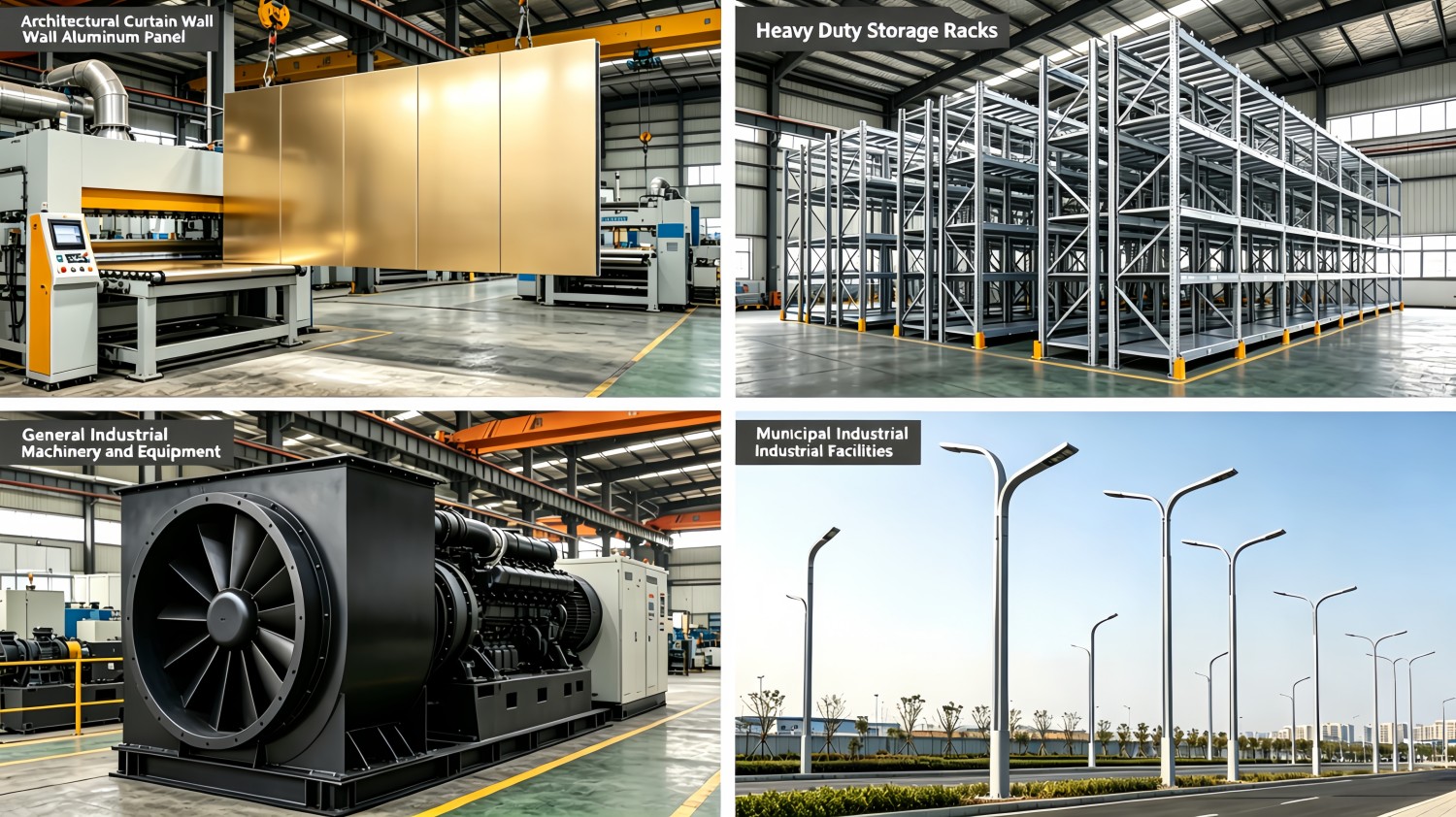
Core applications: architectural hardware (door locks, hinges, handles), furniture hardware (guide rails, hinges), bathroom hardware, lighting accessories, fasteners, and electronic hardware.
Core requirements: high adhesion, scratch and wear resistance, exquisite appearance, high efficiency with thin coating, corrosion resistance, and stable batch production.
2. Industry Pain Points
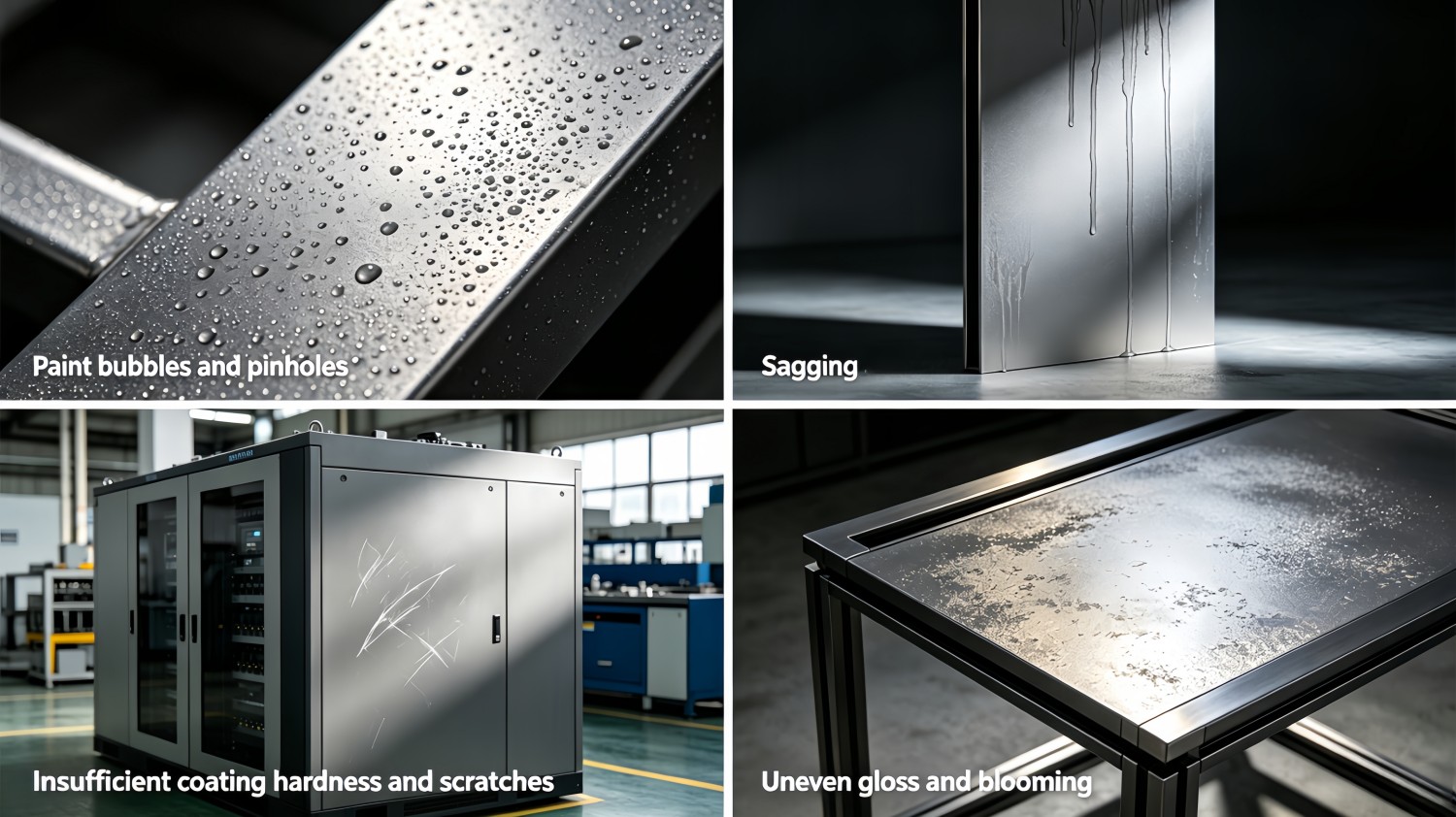
1. The large number of small parts and large batches can easily lead to stacking, resulting in coating adhesion, uneven film thickness, exposed edges and corners, and low finished product qualification rate.
2. Door locks, hinges and other frequently opened and closed parts have poor coating adhesion, paint peeling and weak scratch resistance, which affects the user experience.
3. Bathroom and outdoor hardware are susceptible to corrosion from moisture and salt spray, and ordinary powder is prone to bubbling, rusting, and mold growth.
4. Decorative hardware has strict requirements for appearance. High-gloss/metallic coatings are prone to leveling defects, particles, color differences, and uneven gloss.
3. How to choose
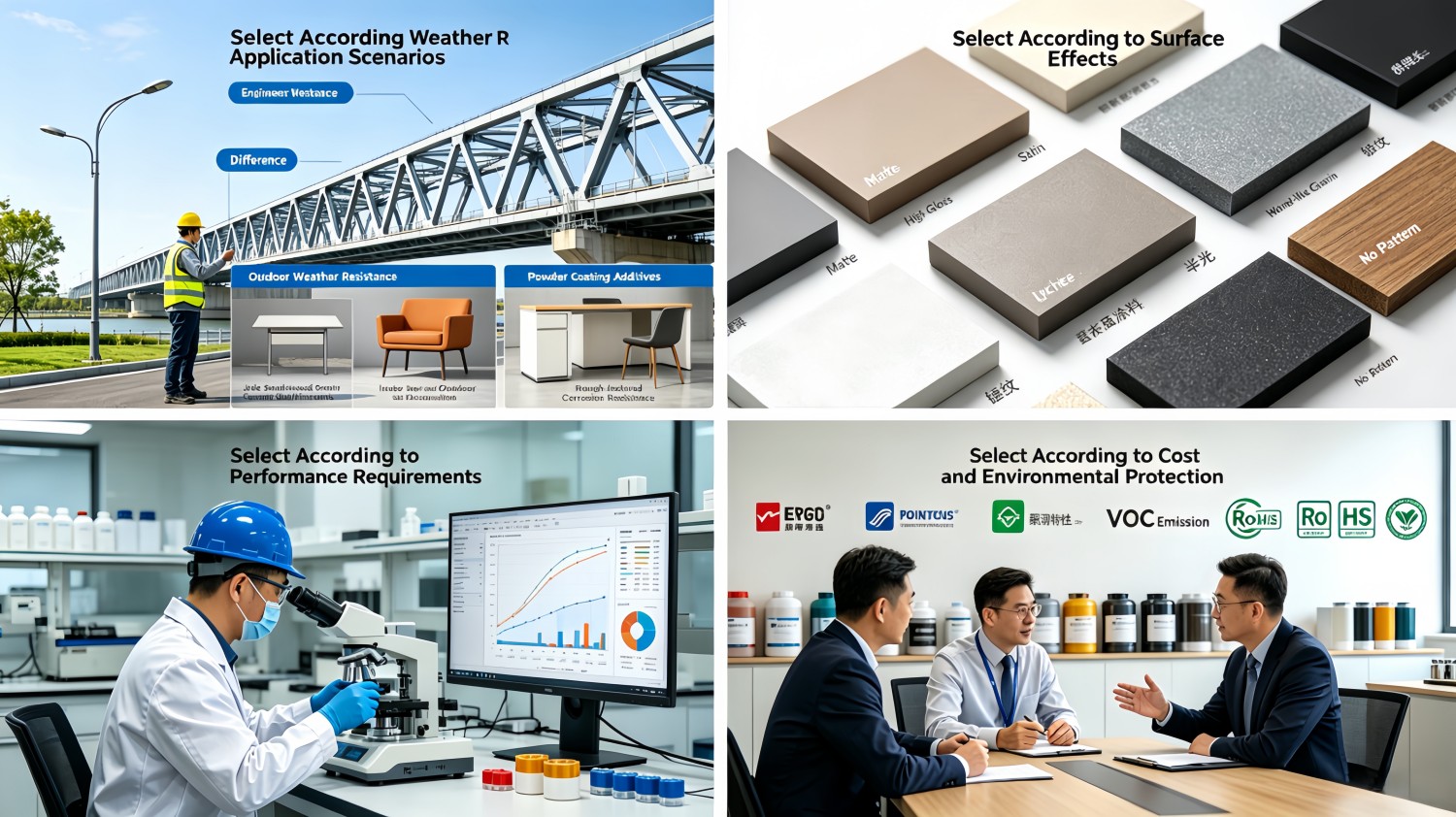
1. Select according to the scene: Indoor hardware (epoxy polyester blend, high gloss/flat gloss/matte); Outdoor/bathroom hardware (pure polyester weather-resistant, fluorocarbon high-end); High wear-resistant hardware (wear-resistant modified polyester); Decorative hardware (metal bonding powder, high gloss/skin-feel powder).
2. Film thickness standard: 40–60μm for general use, 30–50μm for decorative hardware (thin coating is more efficient and avoids adhesion).
3. Core indicators: Adhesion ≤ Grade 1 (cross-cut test); Scratch resistance (indoor ≥ Grade H, outdoor/bathroom ≥ Grade 2H); Salt spray resistance for bathroom hardware ≥ 1000h, outdoor ≥ 500h; Color difference ΔE < 1.5.
4. Why choose this option?
1. Epoxy-polyester blend: The first choice for indoor hardware, with excellent adhesion, good leveling, rich colors, and controllable cost, taking into account both decoration and basic corrosion protection.
2. Pure polyester/fluorocarbon powder: the core choice for outdoor/bathroom use. Pure polyester is water and salt spray resistant, while fluorocarbon is suitable for extremely humid environments, solving the problems of blistering and rusting.
3. Wear-resistant modified polyester: Added wear-resistant filler, hardness reaches 2H level, improves friction resistance, and extends the service life of high-frequency components such as guide rails and hinges.
4. Thin-coat high-efficiency powder: Suitable for small-batch production, reducing powder loss, avoiding stacking and sticking, and improving production efficiency.
5. Process Recommendations
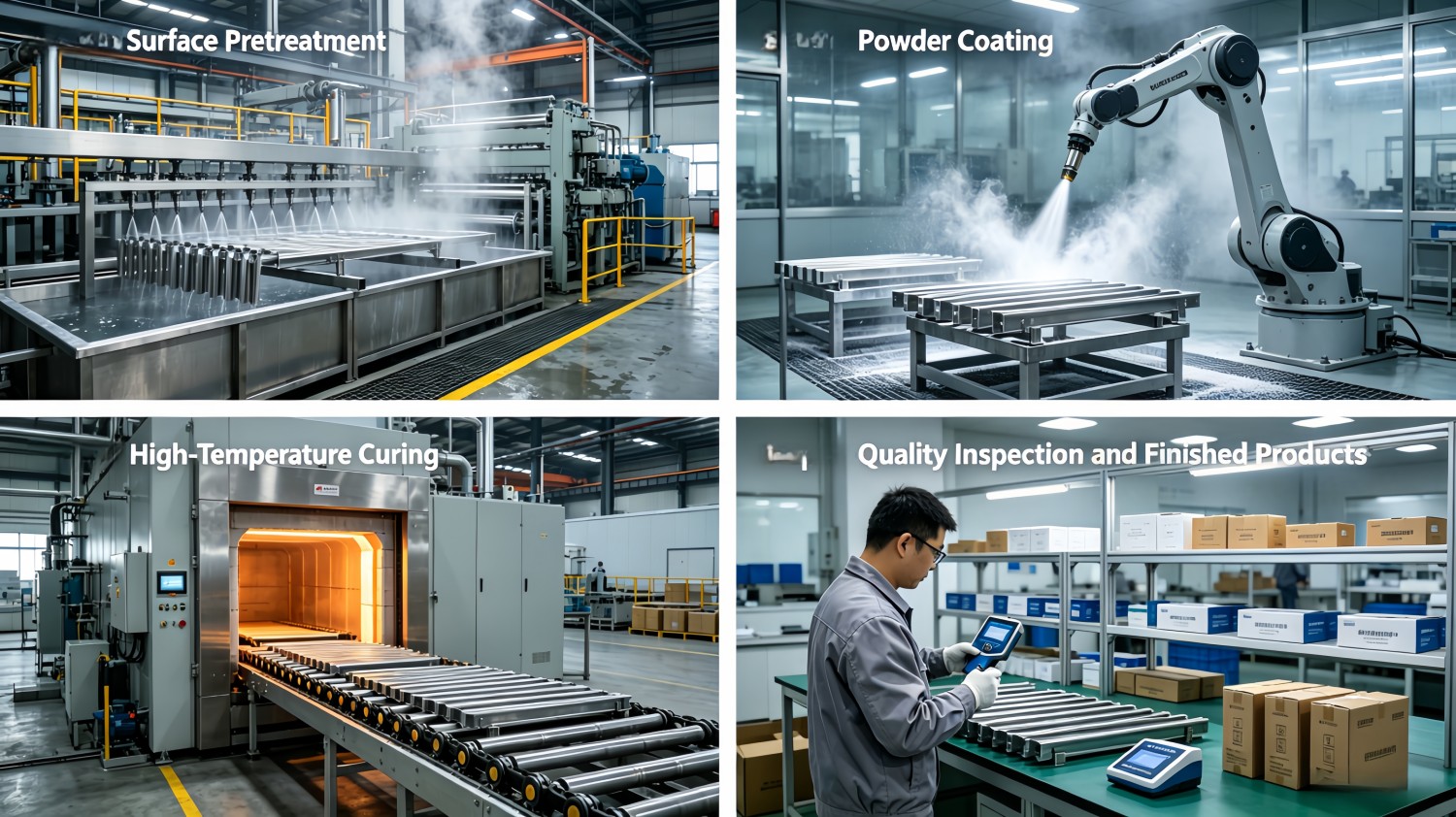
1. Pretreatment process: ultrasonic degreasing → pickling/neutralization → phosphating/passivation → drying; Key requirements: no oil stains or oxide layer on the surface to ensure adhesion.
2. Spraying process: A rotating hanger is used for electrostatic thin coating to control the film thickness uniformly and avoid powder buildup and exposed substrate.
3. Curing process: 180–220 ℃ × 10–15min ( low temperature fast curing) to avoid deformation of small parts.
4. Post-processing and inspection: Sorting after cooling to avoid stacking and scratching; mandatory inspection items (cross-cut adhesion, scratch resistance, salt spray, appearance).
6. Recommended product mix
1. Interior hardware (door locks, handles, hinges): Epoxy polyester blended powder (high gloss/matte optional, color options: RAL9005 black/high gloss/RAL7035 industrial gray/matte/RAL1000 off-white/matte) + ultrasonic degreasing agent + scratch-resistant and wear-resistant additives, exquisite appearance, suitable for mass production; black high gloss is suitable for modern furniture, industrial gray matte is suitable for minimalist decoration, and off-white matte is suitable for warm home furnishings.
2. Bathroom hardware (faucets, towel racks): Pure polyester weather-resistant powder (colors: RAL9004 traffic gray/RAL8000 brown/RAL9016 pure white) + anti-mildew additive + water-resistant sealant, salt spray resistance ≥1000h, moisture-proof and mildew-proof, not easy to bubble or rust; traffic gray is suitable for modern bathrooms, brown is suitable for retro bathrooms, and pure white is suitable for minimalist bathrooms. All are water-resistant, dirt-resistant and easy to clean.
3. Decorative Hardware (Lighting Fixtures, High-End Handles): Metallic Bonding Powder/Skin-like Powder (Colors: Metallic Silver/RAL8014 Copper/Skin-like Black/Skin-like Off-white) + High Leveling Agent + Adhesion Promoter, resulting in a delicate appearance and stable color difference across batches; Metallic Silver is suitable for modern lighting fixtures, Copper is suitable for retro handles, and Skin-like Black/Off-white is suitable for high-end minimalist decorative hardware.
V. General Selection Principles
1. Substrate matching: Aluminum profiles/coils → pure polyester/fluorocarbon powder; steel coils/wrought iron → epoxy/epoxy polyester powder; stainless steel → special adhesion-enhancing powder.
2. Environmental priority: Outdoor scenarios prioritize weather resistance (focusing on QUV aging and salt spray testing); indoor scenarios prioritize appearance and basic corrosion protection; coastal/highly corrosive environments use fluorocarbon or ultra-weather-resistant formulations.
3. Process compatibility: Aluminum profiles → conventional electrostatic spraying; coils → high-speed thin-coating and fast-curing spraying; small hardware parts → thin-coating and high-efficiency spraying.
4. Cost balance: Pure polyester powder is selected for mid-range projects (best cost performance); fluorocarbon powder is selected for high-end projects and extreme environments (quality priority); thin-coating and fast-curing formulas are preferred for mass production (cost reduction and efficiency improvement).
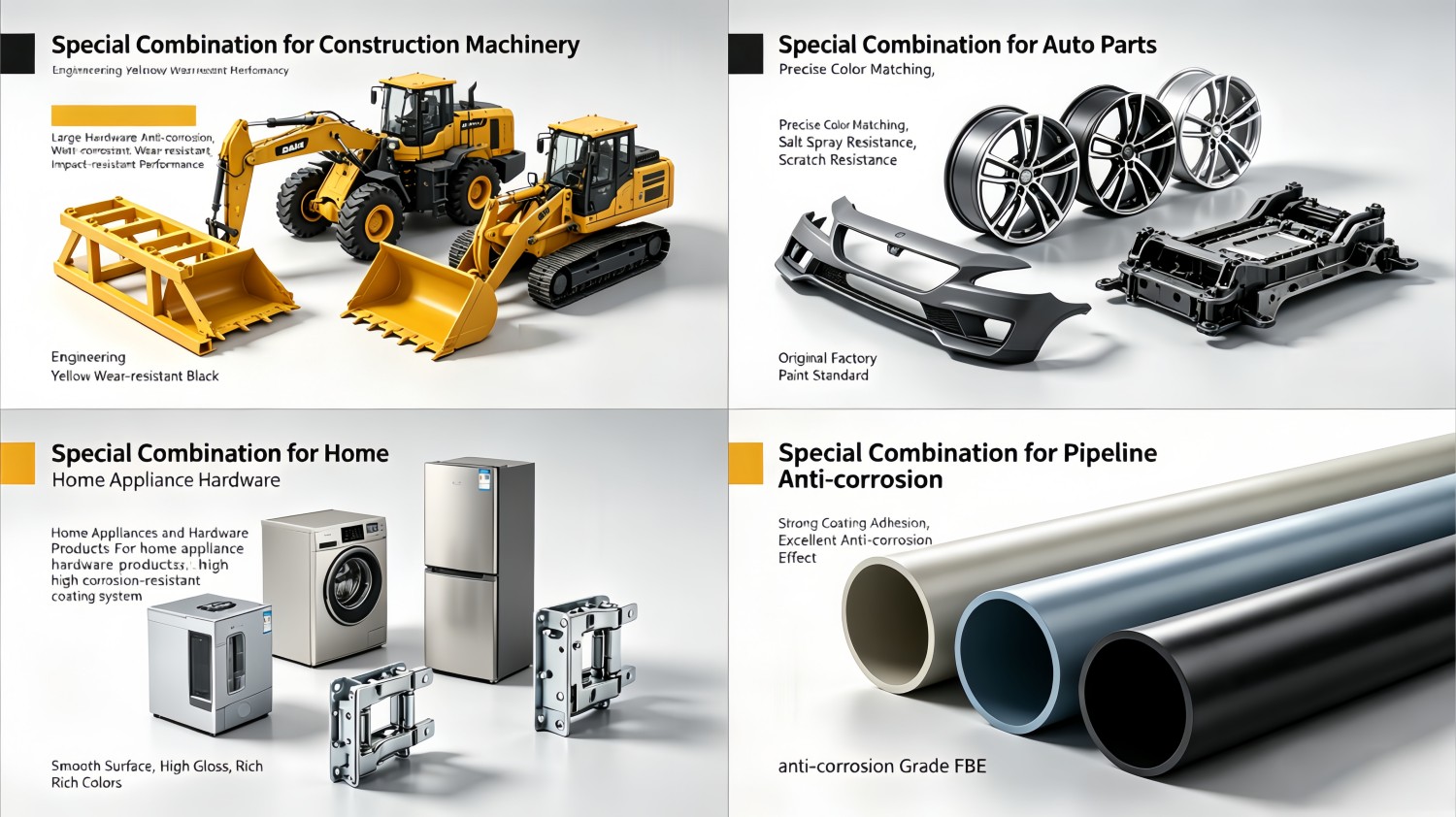
VI. Recommended Product Combinations for Each Scenario
This chapter summarizes the core logic of recommended product combinations for four major application scenarios, facilitating procurement and production implementation. All combinations are adapted to the corresponding scenario's process requirements, balancing cost-effectiveness and quality, and can be flexibly adjusted according to actual project budgets and environmental levels.
1. Core Adaptation Logic: All product combinations follow the principle of "main powder + auxiliary materials + additives". The main powder determines the core performance of weather resistance and corrosion prevention, the auxiliary materials (passivating agent, primer) improve adhesion, and the additives optimize the construction effect and the quality of the finished product.
2. Flexible adjustment principle: In ordinary scenarios, the amount of additives can be reduced to control costs; in high-end scenarios, adhesion promoters and sealants can be added to improve product durability; for mass production, fast-curing and thin-coating formulas should be prioritized to increase production capacity and reduce losses.
3. Color Scheme Recommendations: The recommended color schemes for each scenario are all mainstream and compatible colors in the industry, which can be used directly; custom color schemes (RAL/PANTONE color codes) are also supported, and the color depth and gloss (high gloss/matte/sand texture) can be adjusted according to the decoration style and project needs. For special needs such as metallic effects and wood grain transfer, special auxiliary materials can be used to ensure stable results.

Deeply cultivating the field of metal powder coatings, building a global production and service network, becoming a leading global provider of metal surface coating solutions, and working together with partners for mutual benefit.


