Solutions
Custom Color & Functio
Superior

Aluminum profiles are widely used in modern buildings for windows, doors, curtain walls, fences and decorative structures. As these applications are continuously exposed to sunlight, rain, humidity and environmental changes, the coating system needs to provide long-term protection while maintaining consistent appearance.
YATU provides customized powder coating solutions for aluminum profiles based on different application environments, performance requirements and decorative expectations. From standard architectural finishes to premium decorative effects, we help customers select suitable coating solutions for different aluminum extrusion applications.
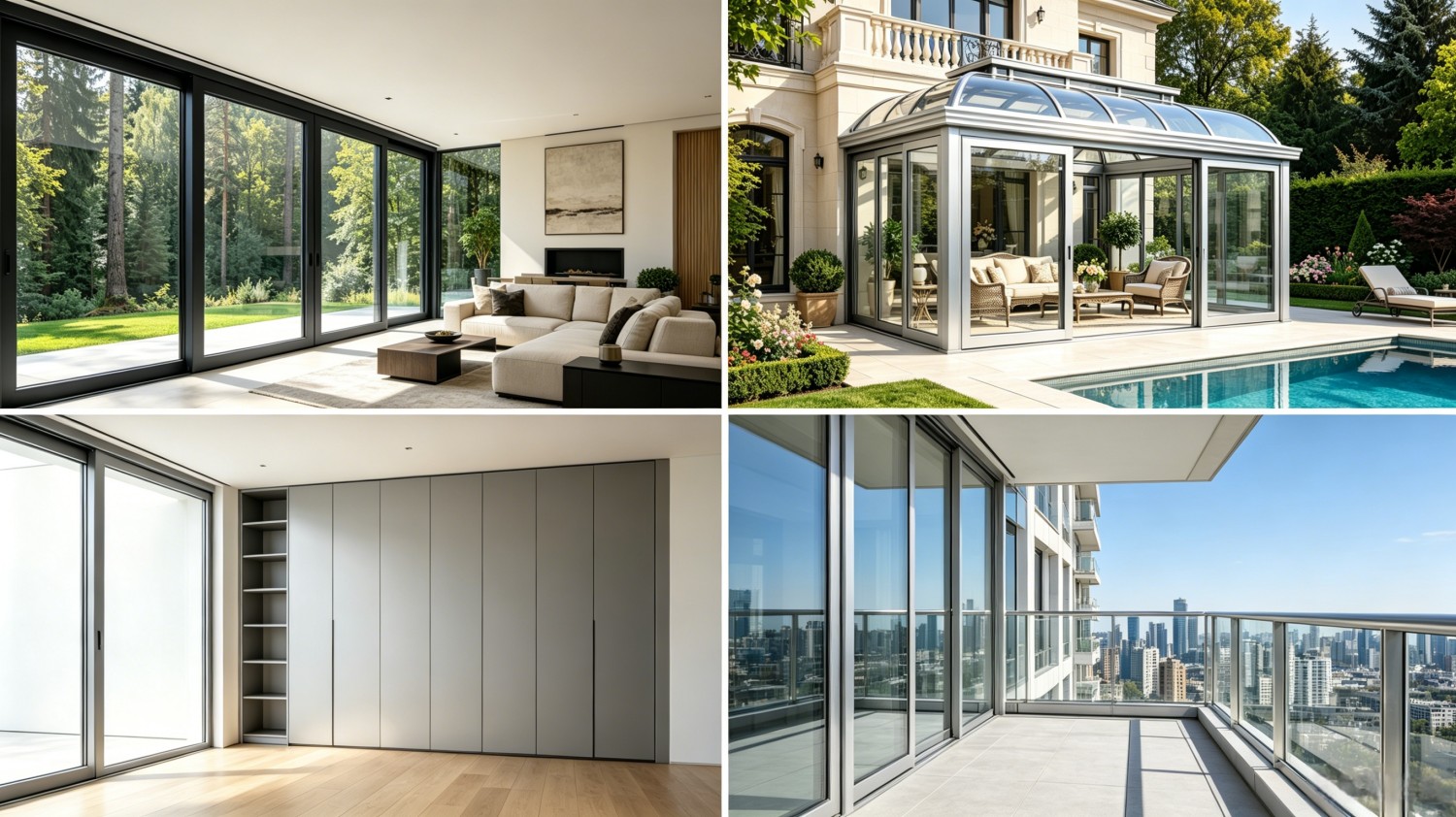
1. Long-term outdoor use can easily lead to chalking, yellowing, fading, and cracking. Coastal/industrial areas are severely corroded by salt spray and acid rain, which significantly shortens the coating's lifespan.
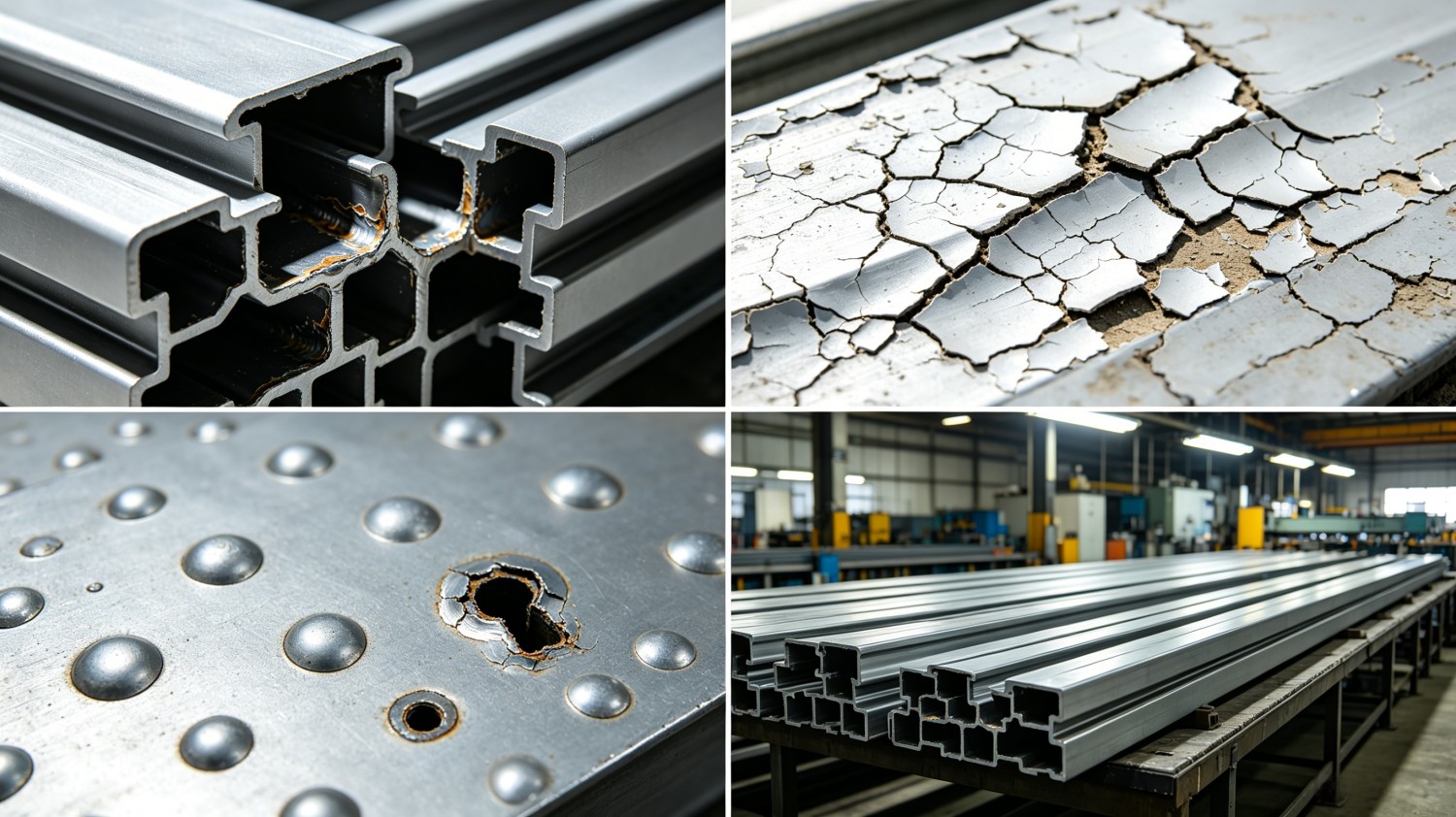
2. The profile has many grooves and dead corners, which can easily cause the Faraday cage effect in electrostatic spraying, resulting in appearance defects such as exposed substrate, uneven film thickness, thick edges, and orange peel.
3. Inadequate pretreatment (incomplete degreasing, excessively thin passivation film) leads to poor coating adhesion and subsequent peeling, causing warranty disputes and rework costs.
4. Mass production is prone to color differences, the metal bonding powder has poor stability and is prone to silver peeling, and the wood grain transfer process is prone to blurry patterns and color fading.
| Requirement | Why It Matters |
|---|---|
| Weather resistance | Protects aluminum profiles from outdoor exposure, sunlight and rain |
| UV resistance | Helps maintain color stability during long-term outdoor use |
| Corrosion protection | Improves durability in humid and coastal environments |
| Color consistency | Ensures uniform appearance across large building projects |
| Adhesion performance | Prevents coating peeling or surface failure |
| Decorative appearance | Provides different colors, textures and finishes for architectural design |

Every architectural project may have different requirements regarding color, finish and performance. YATU provides customized powder coating solutions including:
Support for:
Available options:
Solutions can be adjusted according to:
1. General outdoor (5-8 years of weather resistance): Pure polyester TGIC cured powder, acid value 32-40 (containing HALS light stabilizer), QUV aging ≥1000h, salt spray ≥500h, suitable for ordinary residential doors and windows, and railings in non-coastal areas.
2. Ultra-weather resistant (10–15 years of weather resistance): Ultra-weather resistant pure polyester + inorganic ceramic pigments, QUV aging ≥2000h, salt spray ≥1000h, color difference ΔE<3, suitable for commercial curtain walls, coastal/industrial zone projects.
3. High-end extreme (15–20 years of weather resistance): Fluorocarbon powder (PVDF/FEVE), fluorocarbon content ≥70%, UV resistant, acid, alkali and salt spray resistant, suitable for landmark building curtain walls and highly corrosive coastal areas.
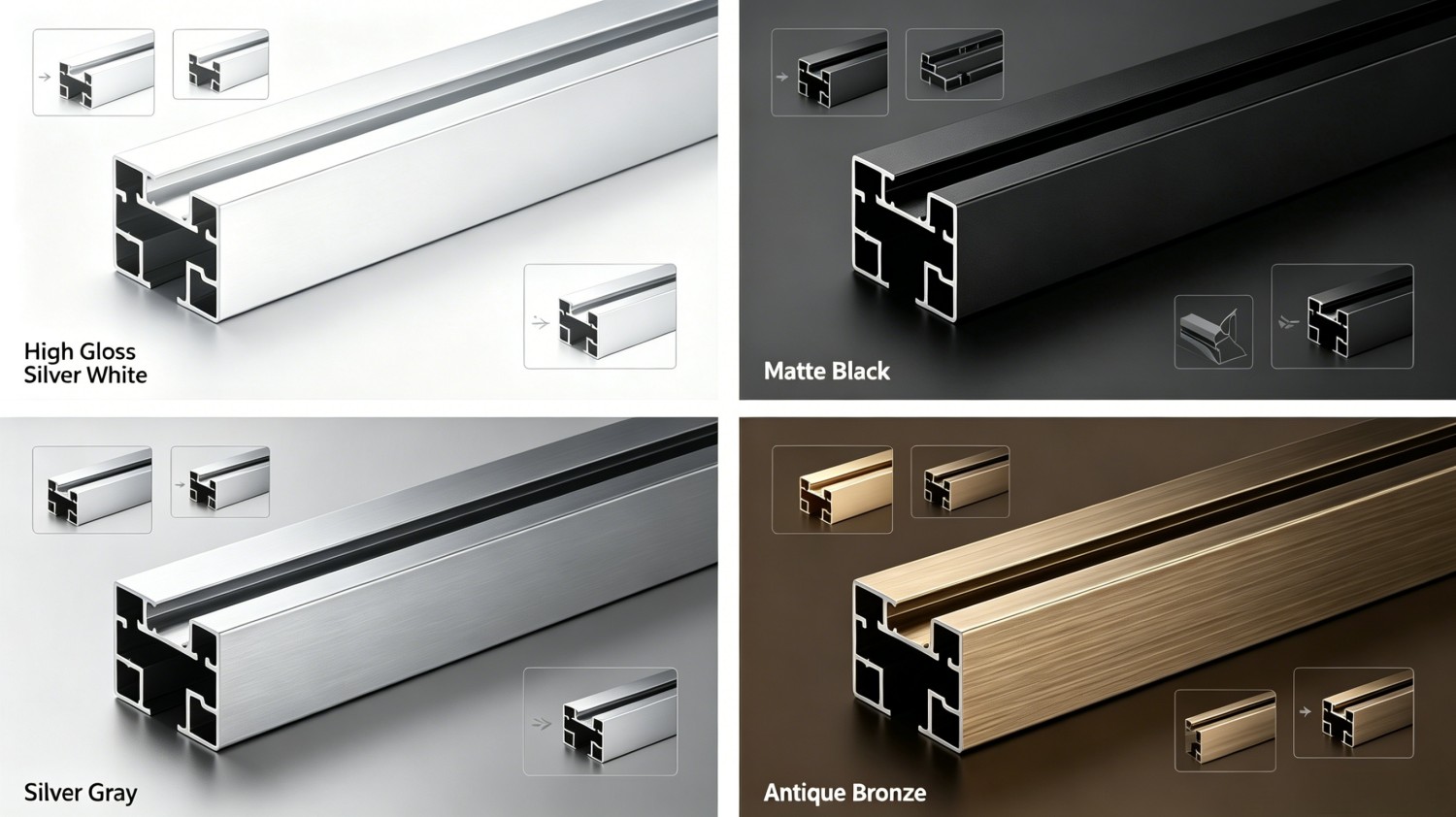
4. Surface finish: matte/flat (mainstream), sandblasted/hammered (scratch-resistant and conceals imperfections), metal bonding (high-end decoration), wood grain transfer (imitation wood effect).
5. Film thickness standard: 60–80μm for general scenarios, 70–90μm for curtain walls/coastal high-corrosion areas.
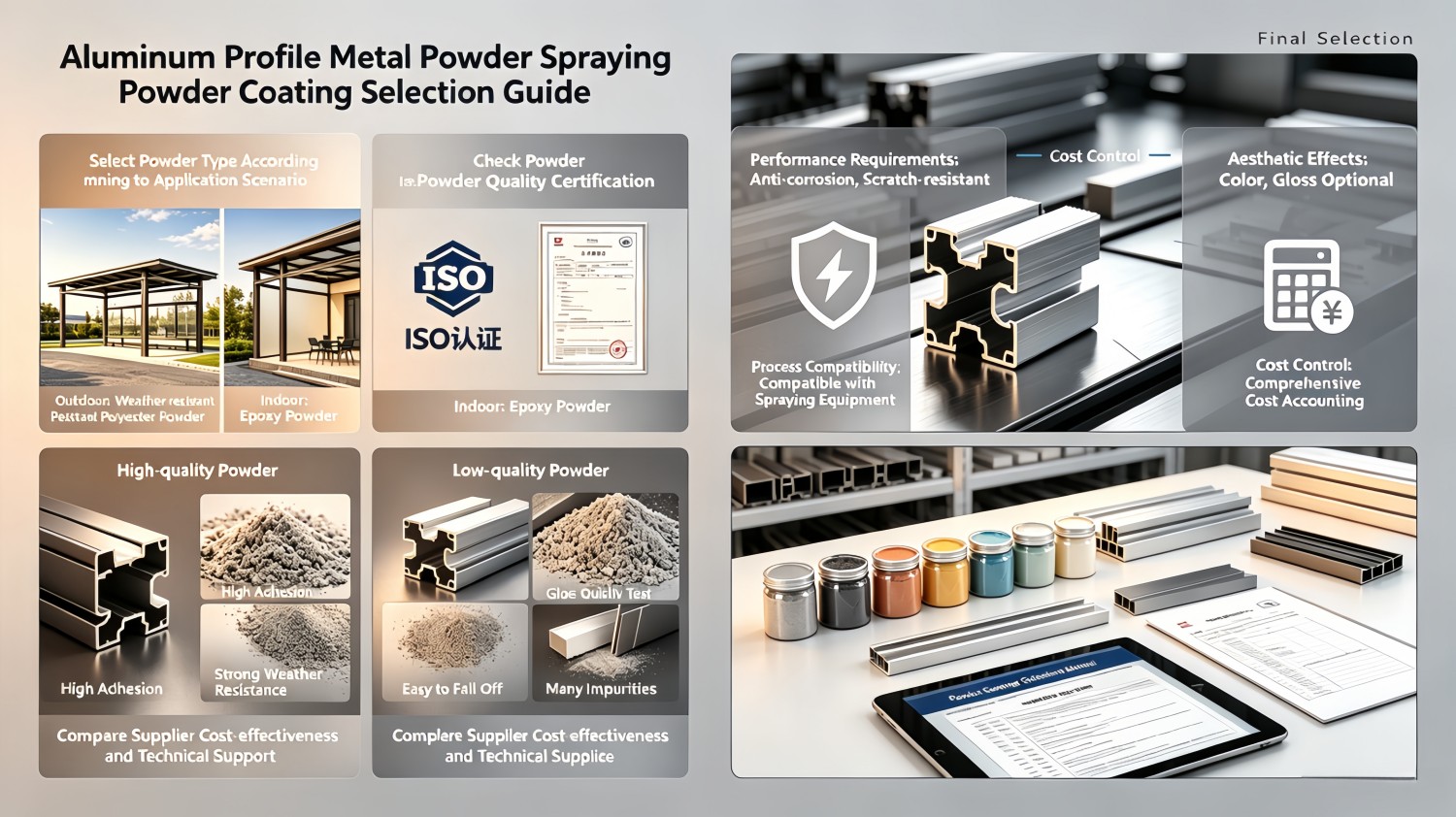
1. Pure polyester TGIC powder: It offers the best cost performance, balancing leveling, weather resistance, and adhesion. It is suitable for the passivation pretreatment process of aluminum profiles and is the mainstream choice for building aluminum profiles.
2. Ultra-weather-resistant pure polyester formula: By combining high weather-resistant resin, inorganic pigments and light stabilizers, it precisely solves the pain points of outdoor chalking and yellowing, and extends the project warranty period.
3. Fluorocarbon powder: Fluorocarbon bonds are chemically extremely stable, with strong resistance to UV, acids and alkalis, and salt spray. It is the only choice for extreme environments and high-end projects, with a high premium but guaranteed quality.
4. Metallic Bonding Powder: Unlike ordinary metallic powder, it uses a special process to solve problems such as silver loss, color difference, and uneven powder application, resulting in a uniform and long-lasting metallic texture, suitable for high-end decoration needs.
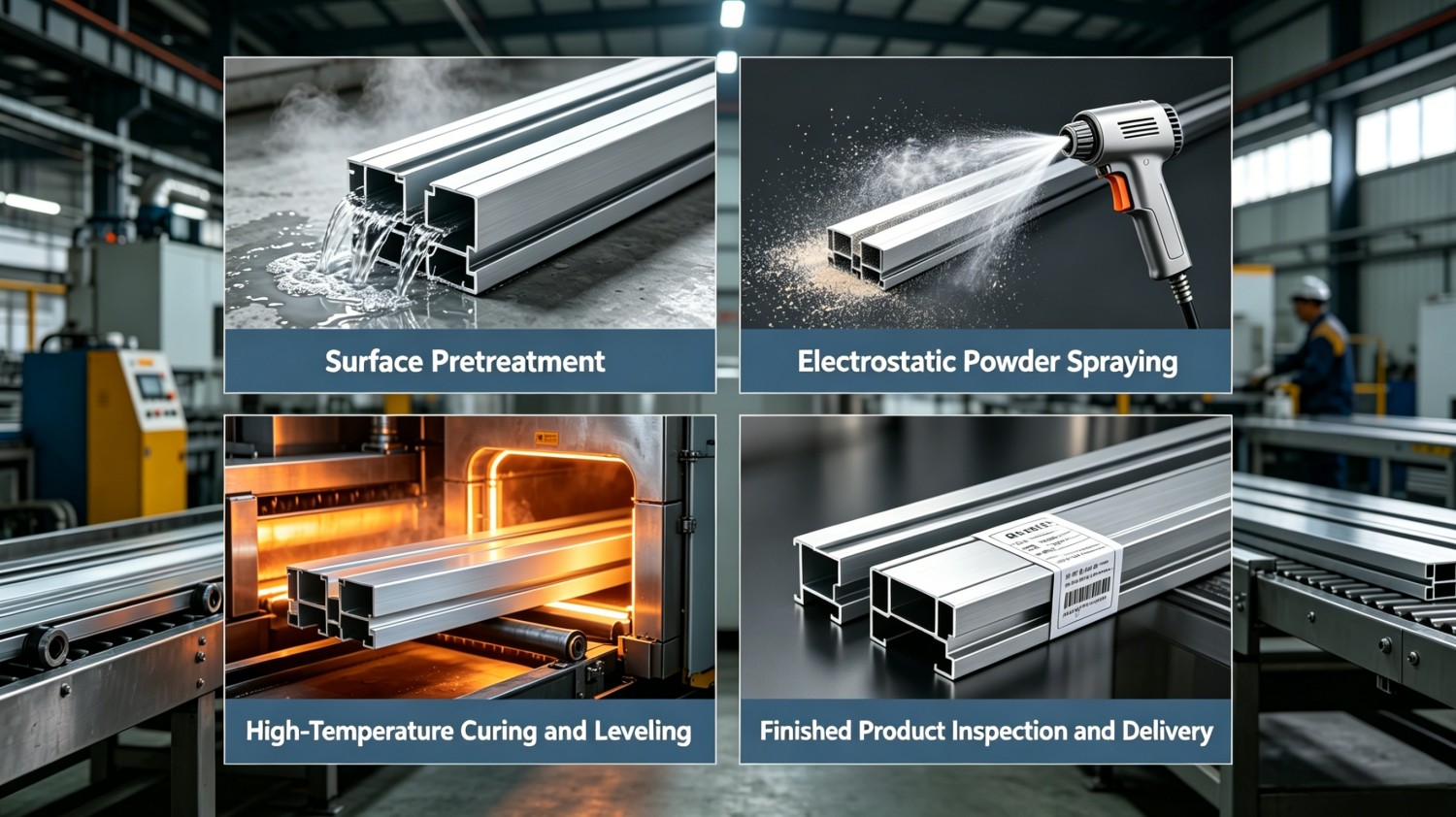
1. Pretreatment process: Degreasing → Alkali etching → Neutralization → Chromating/Chromium-free passivation (zirconium-based) → Drying; Key requirements: Passivation film weight ≥ 0.8 g/m², to ensure coating adhesion.
2. Spraying process: Use electrostatic spray gun (corona/friction type), with a profile suspension spacing of ≥15cm, adjust the voltage to 60-80kV and powder output, and spray grooves and dead corners from multiple angles to avoid missing the bottom.
3. Curing process: 180–220 ℃ × 15–20min (subject to the actual temperature of the workpiece); Requirements: Curing oven temperature uniformity ±5℃, avoid insufficient curing or overheating.
4. Quality Inspection: Mandatory inspection items (film thickness, cross-cut adhesion ≤ 1 level, QUV aging, salt spray test); Color difference control: batch sample comparison, ΔE < 1.5.
6. Recommended product mix
1. General outdoor scenarios (residential doors and windows, non-coastal railings): Pure polyester TGIC cured powder (RAL7035 industrial gray/RAL9005 black/RAL7016 dark gray) + chromium-free passivating agent + special electrostatic spraying additive, suitable for conventional production processes, with the best cost performance; the color scheme is mainly neutral, dirt-resistant and easy to maintain, suitable for most residential building styles.
2. Ultra-weather-resistant applications (commercial curtain walls, coastal areas): Ultra-weather-resistant pure polyester powder (inorganic ceramic pigment color scheme: RAL5010 sky blue/RAL6005 grass green/RAL8017 yellowish brown) + zirconium passivating agent + leveling agent, meeting Qualicoat Class II certification, balancing weather resistance and appearance; color schemes match the aesthetics of commercial buildings, sky blue is suitable for office buildings, grass green is suitable for municipal curtain walls, and yellowish brown is suitable for high-end residential curtain walls.
3. High-end decorative scenarios (landmark curtain walls, high-end doors and windows): Fluorocarbon powder (PVDF/FEVE, color scheme: RAL9006 matte black/RAL1015 beige/RAL3020 coral red) + special adhesion promoter + metallic bonding powder (optional, silver gray/champagne gold), paired with wood grain transfer paper (walnut/oak color available for wood-look effect) to enhance the high-end texture and service life; matte black is suitable for modern landmarks, beige for high-end residences, and coral red for distinctive commercial buildings.

Deeply cultivating the field of metal powder coatings, building a global production and service network, becoming a leading global provider of metal surface coating solutions, and working together with partners for mutual benefit.


